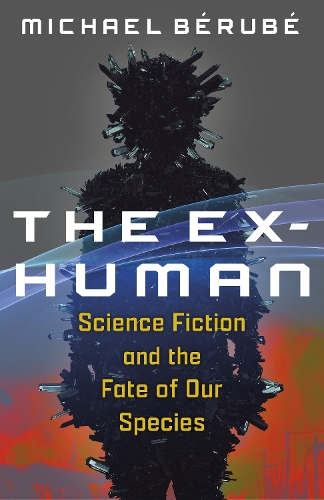
Книга The Ex-Human: Science Fiction and the Fate of Our Species
Facing threats like climate change and nuclear warfare, science fiction authors have conjured apocalyptic scenarios of human extinction. Can such gloomy fates help us make sense of our contemporary crises? How important is the survival of our species if we wind up battling for an Earth that has become an unhabitable hellscape? What other possible futures do narratives of the end of humanity allow us to imagine?
Michael Bérubé explores the surprising insights of classic and contemporary works of SF that depict civilizational collapse and contemplate the fate of Homo sapiens. In a lively, conversational style, he considers novels by writers including Ursula K. Le Guin, Margaret Atwood, Liu Cixin, Philip K. Dick, and Octavia Butler, as well as films that feature hostile artificial intelligence, such as 2001: A Space Odyssey, Blade Runner, and the Terminator and Matrix franchises. Bérubé argues that these works portray a future in which we have become able to see ourselves from the vantage point of something other than the human. Though framed by the possibility of human extinction, they are driven by a vision of the “ex-human”—a desire to imagine that another species is possible. For all science fiction readers worried about the fate of humanity, The Ex-Human is an entertaining yet sobering account of how key novels and films envision the world without us.
"A thought-provoking examination of sci-fi novels and films that invite audiences to contemplate humanity’s 'sorry fate from the vantage point of something other than human.' . . . Bérubé brings welcome humor to the proceedings . . . Sci-fi fanatics will appreciate Bérubé’s offbeat takes." - Publishers Weekly
"[Bérubé's] analyses are intensive yet fluid, variegated with a range of cultural, political, and personal references. Spirited and speculative, The Ex-Human showcases science fiction for its formidable and prescient nature." - Foreword Reviews
"Michael Bérubé is one of our best social and cultural critics . . . Bérubé’s discussions of all these texts are subtle and insightful. . . . Above all, though, the book is concerned with how science fiction allows us to entertain non-human perspectives upon human life and existence, and specifically to imagine the end of humanity — or rather (and better) its transformation in radical ways that exceed our capacity for imaginative projection and continued empathy." - The Pinocchio Theory