This is an automatically translated description
Gothic, Baroque, Classicism. Renaissance and eclecticism. Wars, fires, revolutions and reformation. Just a glance at the architecture of the city is enough to understand how it was formed and what epochs influenced it. If, of course, you know from which side to look at it.
What are the peculiarities of St Peter's Cathedral and what faults did the six architects who worked on it allow? What is a pediment and Doric order? Why is the dance house in Prazia so horrible, how are Gothic and Christian walks connected, and why should you go to Lviv if you cannot visit Florence?
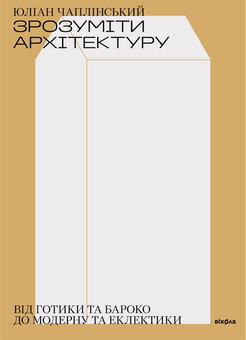
This book is about how to learn to "read" the city and feel its architecture, to pay attention to those details that were previously unnoticed. Urbanist and architect Julian Chaplinsky not only explains how to distinguish Baroque from Renaissance, what Mannerism is and where Gothic began, but also masterfully weaves politics, art and literature into this essay. He talks about Pinzel, Caravaggio and Michelangelo, and tells us how the architecture of London changed after the great fire and why Paris has such a characteristic building. She also tells us about the houses of famous architects and which side of the Rhine is best to photograph Cologne Cathedral from.
Julian Chaplinsky is an architect and urbanist, author of the YouTube channel CHAPLINSKY VLOG. He has been working as an architect since 2005, and from 2011 to 2015 he managed his own architectural firm CHAPLINSKY & Associates. In partnership with Stefan Benisch he worked as the chief architect of the project for the Metropolitan Andrei Sheptytsky Centre, which was later nominated for the EUC Architecture Prize. For more than 5 years he worked as the chief architect of Lviv; for two years he held the post of Deputy Minister of the Ministry of Community Development and Territories.
The book is available from Yakaboo for free reading at the PrivatBank library.