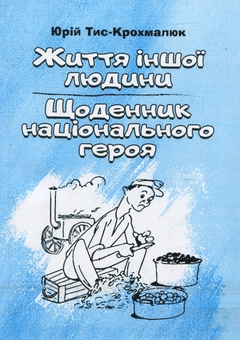
This is an automatically translated description
The Life of Another Man returns to the theme of the eternal wanderer, which has been forgotten in world literature, and gives this theme a new and changed interpretation. Marko the Cossack, the hero of Tysa's story, is not a penance for a serious crime, not Storozhenkiv Marko the Damned, and not Agasfer. Marko does not commit any crime. He is punished only for the violent and unquenchable nature of his steppe character, which is one of the typical flaws of our national character. The punishment is a life without death and without aging among the new generations, with whom Marko feels alien and unnecessary. Marko's personal adventures begin with the Cossack campaigns, with the battles of the people of Khmelnytskyi, and go on to include the life of those environments that had an impact on the historical or cultural past of individual generations. Cyril and Methodius, Shevchenko, Kulish, Franko, Drahomanovites, Hrushevsky, the beginning of the First World War, the UVO underground, Chuprynka, Brody, the UPA - this is a confrontation of generations, ideas and events. It shows the continuity of the second great journey, the journey of the nation, of which Marko is a small part. The fate of his life coincides with the fate of his people, and in moments of selfless service to the nation's goals, the inner emptiness of Marko's life is filled.
Probably everyone knows the famous book by Czech author Jaroslav Hasek "The Adventures of the Brave Soldier Schweik". Many people have read it - probably in translation (let's note to ourselves how much such a book must lose when translated into a foreign language), because not everyone knows Czech... "Meanwhile, how many of you know that there is our Ukrainian 'Schweik'... - This is Selepko Lavochka from the Ukrainian Division 'Galicia'!"