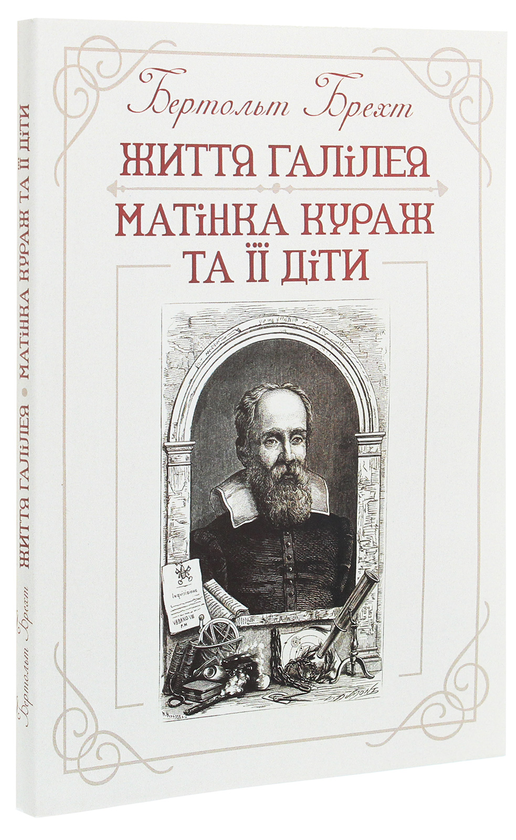
This is an automatically translated description
The Life of Galileo is a philosophical drama that had different interpretations and thus encouraged the reader to reconsider his or her own position and worldview. The work was based on scientific, social, moral and philosophical aspects. The hero discovered scientific laws, social order and himself. The purpose of the play is to remind us of the scientist's responsibility for the consequences of his discoveries. The scientist Galileo fought for the truth, because it became a "child of time, not of authority". The hero went through a difficult path from romantic optimism, through betrayal of himself and despair, to a deep understanding of the essence of everything that happened and sincere repentance.
The play Mother Courage and Her Children was written in the autumn of 1939, it is a story about the war of a man who looks at the world with his eyes wide open. Behind the scenery of the Thirty Years' War, which ended three centuries earlier, the pathos and lowliness (shame) of the Second World War, embodied in the figure of Mother Courage, shines through. The horror of war is revealed not so much in the scenes of violence that are its face, but in the distortion of virtues that in peacetime indicate nobility of spirit. Mother Courage's children do not betray themselves and die in the crucible of war, which leaves behind the ashes of all humanity. Brecht staged the play for the first time in 1941 and thereby accused the war of destroying the values that are the measure of humanity. After the end of the Second World War, Brecht wrote: "Great Carthage fought three wars. It was still powerful after the first, still populated after the second. It was impossible to find it after the third.