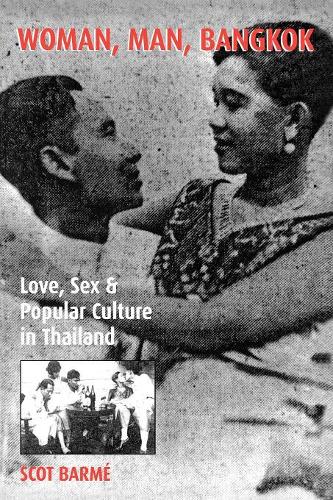
Book Woman, Man, Bangkok: Love, Sex, and Popular Culture in Thailand
During the early decades of the twentieth century, Thailand's capital, Bangkok, took on an increasingly cosmopolitan character-a development fueled both by global economic forces and a local revolution in communications. The 1920s were a particularly dynamic period of social and cultural transformation that had a profound impact on the development of Thai modernity. This book examines the growth of a polyphonous and often vociferous Thai public, a public that used a range of new media outlets to express themselves and clamor for a more just and equitable social order. Scot BarmZ mines a rich lode of previously ignored cultural ephemera found in popular newspapers, magazines, novels, short stories, film booklets, and cartoons to create a vibrant cultural history of early modern Thailand that moves beyond conventional, elite-based historical studies of the period. By focusing on such controversies and conflicts as the status of women, relations between the sexes, class antagonisms, and the growth of a commercial mass culture, this book offers a new interpretation of the key decade of the 1920s and its significance for contemporary Thailand.
"Barmé performs a monumental task. He “peoples” Siam, bringing it to life with a vibrancy and immediacy by parading before us the issues and images that roused the population of early 20th century Bangkok." - Journal of Southeast Asian Studies
"Unlike any other English or Thai language history, Barmé?s study puts you on the ground in the always scintillating and often over-stimulating Bangkok, a city characterized by moral and economic extremes as early as the 1910s. His book offers the firsturban social history of Bangkok that also chronicles the formation of Siam?s burgeoning middle class and its ideological stances. The sheer amount of detail Barmé gleaned from Thai-language newspapers, political cartoons, magazines, film booklets, novels, short stories, and other documentation, make his book a cornucopia of the quotidian. Barmé performs a monumental task. He ?peoples? Siam, bringing it to life with a vibrancy and immediacy by parading before us the issues and images that roused thepopulation of early 20th century Bangkok. Tamara Looss" - Journal of Southeast Asian Studies
"[A] fresh look at the last decades of absolutist rule....Barme's [be sure to get accent in] prose is very accessible, and with its attractive graphics, this paperback version will be a useful addition to courses on modern Southeast Asia." - American Historical Review
"Woman, Man, Bangkok is an important contribution to an understanding of the intersections of gender, class, sexuality, and nationlism and analytically situates this intersection within an important phase in Thailand's history." - Journal of Asian Studies
"Unlike any other English or Thai language history, Barmé’s study puts you on the ground in the always scintillating and often over-stimulating Bangkok, a city characterized by moral and economic extremes as early as the 1910s. His book offers the first urban social history of Bangkok that also chronicles the formation of Siam’s burgeoning middle class and its ideological stances. The sheer amount of detail Barmé gleaned from Thai-language newspapers, political cartoons, magazines, film booklets, novels, short stories, and other documentation, make his book a cornucopia of the quotidian. Barmé performs a monumental task. He “peoples” Siam, bringing it to life with a vibrancy and immediacy by parading before us the issues and images that roused the population of early 20th century Bangkok. Tamara Loos" - Journal of Southeast Asian Studies