This is an automatically translated description
Panteleimon Kulish's creative heritage is vast and multifaceted. Throughout his life, he was a poet, prose writer, playwright, translator, literary critic and literary historian, publicist, folklorist, ethnographer, historiographer, linguist, and teacher. He wrote in Ukrainian and Russian. During his lifetime, his works were published in magazines, newspapers, almanacs, and in separate editions.
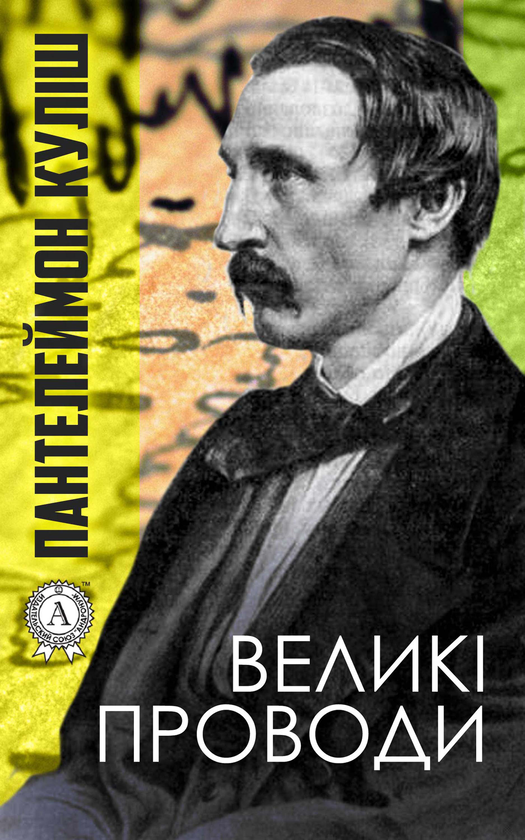
The poem "The Great Send-off" is dedicated to the events of 1648, where, according to M. Zerov, Kulish "seems to be freeing himself from Shevchenko's figurative heritage and tries to record his attitude to the Cossacks in the figure of the Needle."
In the work, the author showed internal contradictions in the rebel camp. On the one hand, there are the registered and overlord Cossacks who sided with Khmelnytsky (Holka's regiment), and on the other hand, there are the «burlaks, lugars, deineks, haidamaks». The Zaporizhzhian Cossacks are portrayed as an unconscious mass blinded by a thirst for revenge and plunder.