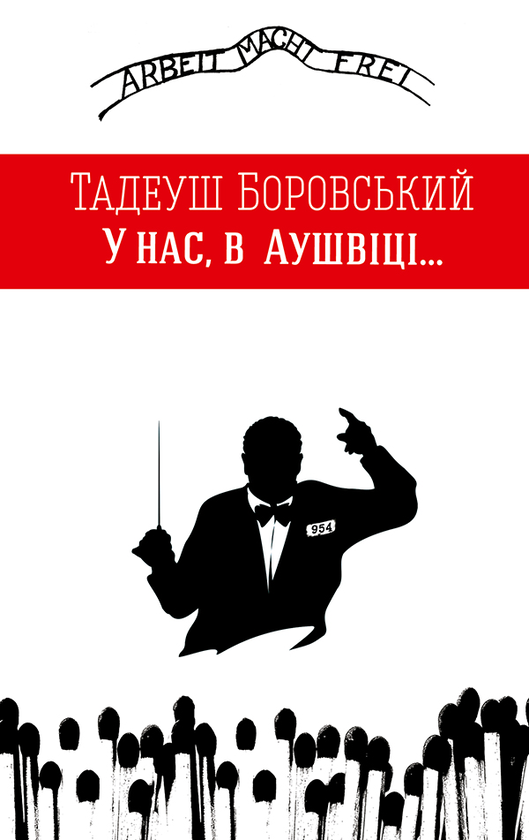
This is an automatically translated description
The eerie power of Borowski's prose lies in the fact that he shows us the everyday life of the Auschwitz-Birkenau camp complex with a kind of otherworldly stylistic indifference, beyond good and evil. Here is a smoking Jew from the Sonderkommando telling his colleagues, to the laughter of his colleagues, how he almost personally pushed his father into the gas chamber to avoid being in it himself; here is a beautiful young woman pretending to cry out in despair, "Mum!" and the children's hands stretched out to her do not concern her, because childless women have a chance to get to work and survive; and here is a football game on the playground, past which several thousand "invited to the gas" are walking - and in the interval between the two corners they manage to kill them... Thus, unlike the black-and-white Soviet films about the war, the camp world was not divided into "ours and the Germans" but constituted a complex social system with its own hierarchy and corruption, with its own lucky and unlucky people, with intrigue and envy, with love and betrayal, and with symphony concerts against the backdrop of the sky browned by crematoria outside the window.