This is an automatically translated description
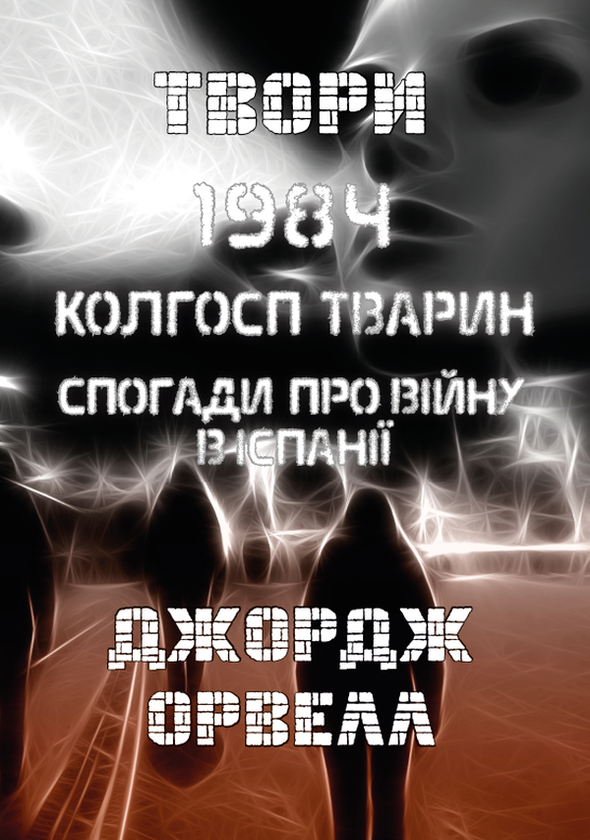
For the first half century after its publication, Orwell's dystopian novel 1984 was perceived as a wicked satire of communist regimes. But, unfortunately, the prophetic details of the world of 1984 are increasingly becoming a reality in the modern, supposedly decommunised world. The fantastical realities invented by George Orwell for the Britain of 1984 have long been part of the cultural code of the modern man, dependent on global corporations, social networks and media.
The novel «1984» along with such works as «We» by Yevgeny Zamyatin (1920), «Brave New World»by Aldous Huxley (1932) and Fahrenheit 451 by Ray Bradbury (1953), is considered a cult example of dystopia.
Orwell's Animal Farm is a parable full of bitter irony and sarcasm. It is a tragic story of a community of animals who decided to get rid of human oppression and fell under the brutal rule of pigs. The story depicts the evolution of a community of naive animal revolutionaries who expelled their owner, the cruel Mr Jones: from romantic freedom to the dictatorship of a treacherous and self-serving boar nicknamed Napoleon. In the novel, Orwell showed the rebirth of revolutionary principles and programmes, that is, the gradual transition from the ideas of universal equality and the construction of utopia to dictatorship and totalitarianism.
«Memories of the War in Spain» — is an essay about the civil war between the Spanish left and the fascists, in which Orwell warns of the dangers of totalitarianism, which emerges and is established largely through manipulation, propaganda and the cowardice and acquiescence of liberals. It is a passionate anti-war, humanistic appeal of the writer, containing the ideas that he developed in the works of fiction presented in this collection.