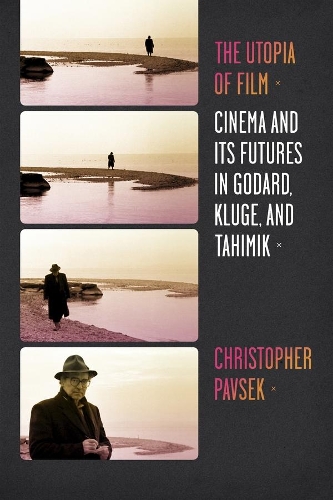
Based on significant research and archival work, Pavsek presents new material and theories out of which he draws original insights and conclusions. He handles opaque and theoretically dense material with an ease and familiarity that renders it accessible and fascinating. -- Nora M. Alter, Temple University The Utopia of Film creates ingenious bridges among three remarkably different filmmakers, vividly and convincingly arguing formal and spectatorial strategies aimed at transforming not just cinema but contemporary culture. -- Timothy Corrigan, University of Pennsylvania At a time when older conceptions of political film have become outmoded, if not forgotten altogether, Christopher Pavsek unexpectedly reinvents this form through his pathbreaking examination of three neglected but extraordinary filmmakers. The Utopia of Film is a revelation and a resource. -- Fredric Jameson, Duke University
The German filmmaker Alexander Kluge has long promoted cinema's relationship with the goals of human emancipation. Jean-Luc Godard and Filipino director Kidlat Tahimik also believe in cinema's ability to bring about what Theodor W. Adorno once called a "redeemed world." Situating the films of Godard, Tahimik, and Kluge within debates over social revolution, utopian ideals, and the unrealized potential of utopian thought and action, Christopher Pavsek showcases the strengths, weaknesses, and undeniable impact of their utopian visions on film's political evolution. He discusses Godard's Alphaville (1965) against Germany Year 90 Nine-Zero (1991) and JLG/JLG: Self-portrait in December (1994), and he conducts the first scholarly reading of Film Socialisme (2010). He considers Tahimik's virtually unknown masterpiece, I Am Furious Yellow (1981-1991), along with Perfumed Nightmare (1977) and Turumba (1983); and he constructs a dialogue between Kluge's Brutality in Stone (1961) and Yesterday Girl (1965) and his later The Assault of the Present on the Rest of Time (1985) and Fruits of Trust (2009).