This is an automatically translated description
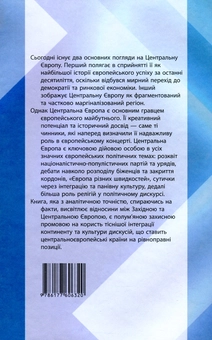
Today, there are two main views of Central Europe. The first is that it is seen as the greatest European success story of recent decades, with a peaceful transition to democracy and market economies. The other portrays Central Europe as a fragmented and partially marginalised region.
One Central Europe is a major player in the European future. Its creative potential and historical experience are precisely the factors that have predetermined its crucial role in European political themes: the rise of nationalist-populist parties and governments, the debate over refugee distribution and border closures, the Europe of different speeds, the clashes over integration and dominant culture, and the increasing role of religion in political discourse.
An analytically rigorous, fact-based account of the relationship between Western and Central Europe, this book is a fiery defence of the continent's closer integration and a culture of debate that puts Central European countries on an equal footing.