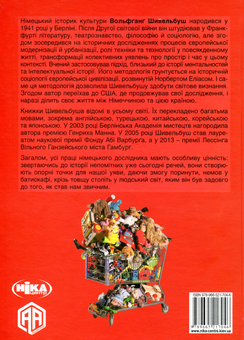
This is an automatically translated description
This work is the widest in historical scope, the most universal in content and the most philosophical of all the author's previous scientific work. At the centre of his new research is the concept of consumption, which the researcher takes beyond the narrow economic context and reveals its philosophical and even mythological implications at the level of metabolism between people and things in general. In connection with the consideration of consumption, the author's field of vision includes the philosophy of Plato, Heraclitus, atomists, and Hegel. He reveals the connection between economic theory and the history of medicine, biology, alchemy, and chemistry. Tracing the roots of the concept of consumption from ancient thinkers to the economic theories of modern times, Shivelbusch pays special attention to the economic theory of the physiocrats, which lost in the competition of ideas with classical political economy and became a historical anachronism, but, according to Shivelbusch, acquires new meaning and relevance in new historical conditions.
The reader will be interested to get acquainted with the ideas of another forgotten doctrine of romantic economics, Adam Miller. Against the background of the historical connections revealed by the author, the modern phenomenon of overconsumption takes on a new meaning, and the book Things and People appears as a kind of response to Jean Baudrillard's famous Consumer Society.