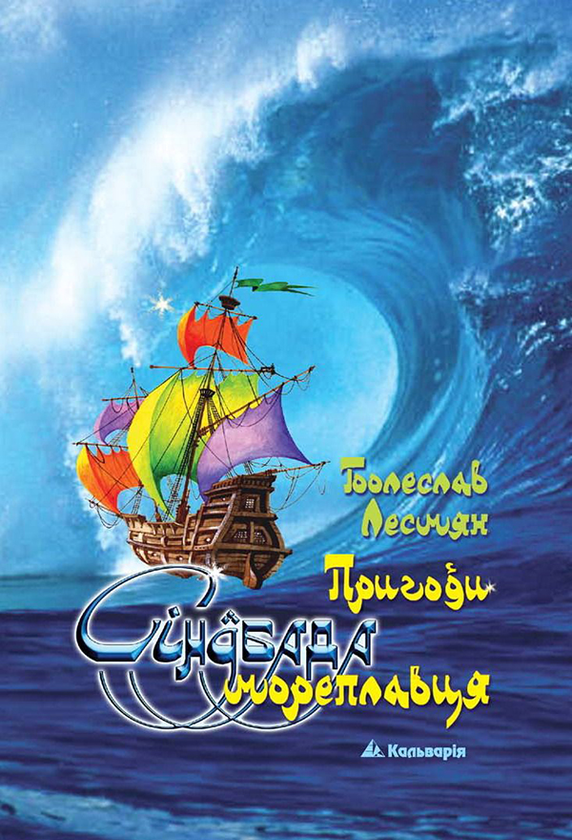
This is an automatically translated description
At times, the story resembles a cocktail of different fairy tales: about a goldfish and about Koshchei the Immortal, reincarnated as the sorcerer Barbel. Only now his death is at the tip of a fishing rod... For the Arab Sinbad, travelling is an integral part of life, as he is a merchant, while in the book by the Polish writer, the thirst for travel turns into mania, or a crazy pursuit of princesses and fresh impressions. The adventures are mixed with a funny absurdity. All Sinbad's troubles happen to him because of a letter from the Sea Devil addressed to him. It turns out that wanderlust is the devil's trick. This is what children learn once and for all. If you look closely, you will see that the boy's misfortunes are the fault of a great graphomaniac with ambitions. This graphomaniac's name is Uncle Tarabuk, and he is the most interesting character in the story, along with the mischievous Sea Devil. Tarabuk is a poet, or rather a poetry writer, a rhyme writer. His uncle ridicules him lovingly but mercilessly: "Uncle Tarabuk loved poetry but hated grammar. He wrote with errors and usually made two or three mistakes per word..." Tarabuk's poems are devoid of meaning, even the fish on the seabed spit on the paper he wrote, and the true connoisseur of poetry, the Sea Devil, believes that "even a donkey could write better". Where does this sarcasm towards avant-garde and symbolist poetry come from? The question remains open. Who knows, maybe it's simple and the author was really annoyed by the illiteracy of numerous poetry fans...