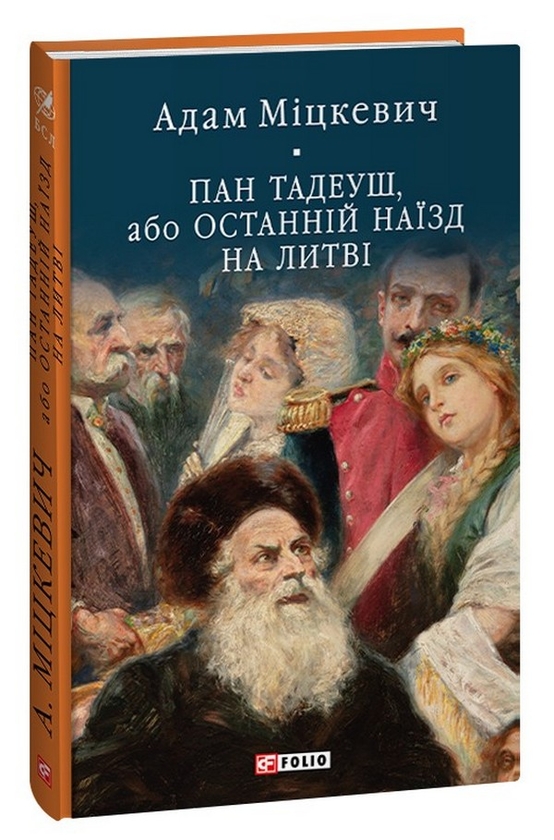
This is an automatically translated description
Adam Mickiewicz (1798-1855) was a prominent Polish poet, translator, and the founder of the new Polish literature and language. He is placed alongside Byron and Goethe. Mickiewicz's role in Polish literature can be compared to that of Shevchenko in Ukrainian literature. The life of the poet - a fighter, a knight, a nobleman - is organically intertwined with the history of Poland and the Polish national liberation movement. According to M. Rylsky, the leitmotif of his activity was "sacrificial and effective service to the fatherland."
The events in the poem "Pan Tadeusz" take place in the early nineteenth century in a rich manor in Lithuania. Mickiewicz depicts the world of noble antiquity with humour and sadness, not hiding its flaws, understanding its historical doom and at the same time admiring its colourfulness, showing unforgettable Polish types that are gradually disappearing, as well as the younger generation. Under the pen of a brilliant Pole, the story of a dispute between old Polish families over a dilapidated castle, somewhat ridiculous and sad, has turned into an encyclopedia of noble customs and life at the turn of the eighteenth and nineteenth centuries. The poem grows from a romantic idyll into a broad epic picture that contains many vivid descriptions of nature, cultural and historical nuances of the era and Polish culture.