This is an automatically translated description
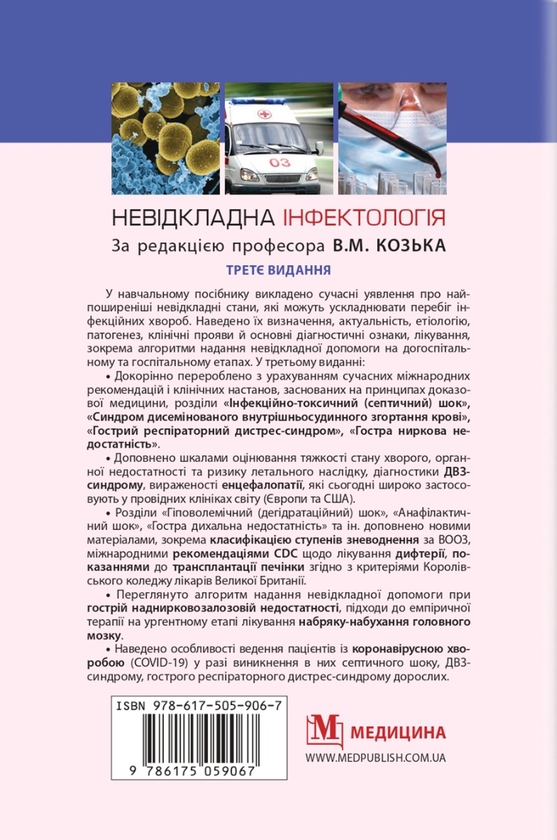
The textbook presents modern ideas about the most common emergency conditions that can complicate the course of infectious diseases. It provides their definitions, relevance, etiology, pathogenesis, clinical manifestations and main diagnostic signs, treatment, including algorithms for providing emergency care at the pre-hospital and hospital stages.
In the third edition:
- Radically revised, taking into account modern international recommendations and clinical guidelines based on the principles of evidence-based medicine, sections "Infectious Toxic (Septic) Shock", "Disseminated Intravascular Coagulation Syndrome", "Acute Respiratory Distress Syndrome", "Acute Renal Failure".
- Supplemented with scales for assessing the severity of the patient's condition, organ failure and risk of death, diagnosis of the DIC syndrome, and severity of encephalopathy, which are widely used in leading clinics in the world (Europe and the USA).
- Sections "Hypovolemic (dehydration) shock", "Anaphylactic shock", "Acute respiratory failure", etc. have been supplemented with new materials, including the WHO classification of dehydration levels, CDC international recommendations for the treatment of diphtheria, indications for liver transplantation according to the criteria of the Royal College of Physicians of Great Britain.
- The algorithm of emergency care in acute adrenal insufficiency, approaches to empirical therapy at the urgent stage of treatment of cerebral edema have been revised.
- The features of management of patients with coronavirus disease (COVID-19) in case of septic shock, DIC, acute respiratory distress syndrome in adults are
presented.
The book is intended for students of medical institutions of higher education, interns, postgraduate students, and practitioners.