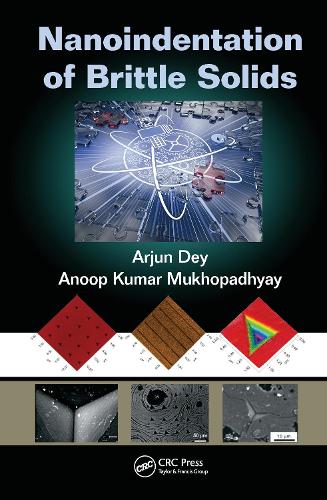
Book Nanoindentation of Brittle Solids
Product code: 20222420
Format
Book language
Publisher
Year of publication
Category
About book
Understanding the Basics of Nanoindentation and Why It Is Important
Contact damage induced brittle fracture is a common problem in the field of brittle solids. In the case of both glass and ceramics—and as it relates to both natural and artificial bio-materials—it has triggered the need for improved fabrication technology and new product development in the industry.
The Nanoindentation Technique Is Especially Dedicated to Brittle Materials
Nanoindentation of Brittle Solids
highlights the science and technology of nanoindentation related to brittle materials, and considers the applicability of the nanoindentation technique. This book provides a thorough understanding of basic contact induced deformation mechanisms, damage initiation, and growth mechanisms. Starting from the basics of contact mechanics and nanoindentation, it considers contact mechanics, addresses contact issues in brittle solids, and explores the concepts of hardness and elastic modulus of a material. It examines a variety of brittle solids and deciphers the physics of deformation and fracture at scale lengths compatible with the microstructural unit block.- Discusses nanoindentation data analysis methods and various nanoindentation techniques
- Includes nanoindentation results from the authors’ recent research on natural biomaterials like tooth, bone, and fish scale materials
- Considers the nanoindentation response if contact is made too quickly in glass
- Explores energy issues related to the nanoindentation of glass
- Describes the nanoindentation response of a coarse grain alumina
- Examines nanoindentation on microplasma sprayed hydroxyapatite coatings
Nanoindentation of Brittle Solids
provides a brief history of indentation, and explores the science and technology of nanoindentation related to brittle materials. It also offers an in-depth discussion of indentation size effect; the evolution of shear induced deformation during indentation and scratches, and includes a collection of related research works.
Details
Publisher
Number of pages
476
Published
2014
Language
English
Illustrations
Not illustrated
Book type
Printed
Binding
Hardcover
Weight
793
ISBN
9781466596900
Dimensions
156x234 мм
Compare size
Code
20222420
Reviews