
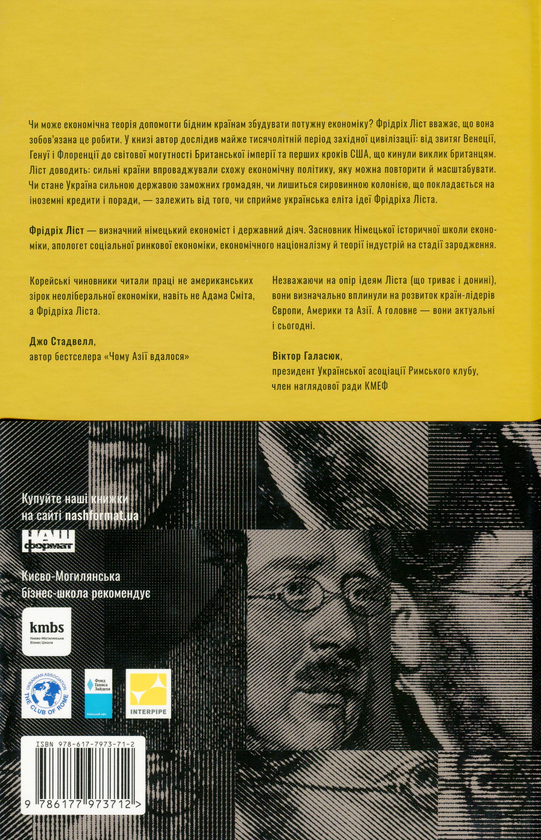

Book Das nationale system der politischen ökonomie
This is an automatically translated description
Can economic theory help poor countries build strong economies? Friedrich List believes that it has to do so, otherwise the theory is meaningless.
In The National System of Political Economy, the author examines the almost thousand-year period of Western civilisation: from the victories of Venice, Genoa and Florence to the global power of the British Empire and the first steps of the United States to challenge the British. List argues that strong countries have implemented similar economic policies that can be replicated and scaled up. As a German patriot, he proposes an action plan for Germany's economic revival, and as a statesman, he initiates the creation of the German Trade and Industry Union. For the first time in the history of economic science, Friedrich List considers economic development from the perspective of the interests of the nation and the state. The author examines the state policy of the largest European countries and the United States, analyses the laws and trade treaties of the British Empire. And he shows that there is a big contradiction between the dominant theory of Adam Smith, which sees only individuals and firms, and real life, where there are states with their own national interests, treasury and productive forces.
List's book became a reference for Germany under Otto von Bismarck. The architect of Japan's economic reforms, Hirata Tosuke, translated it into Japanese in the 1890s, and South Korean reformers were reading it in the 1970s.
Whether Ukraine will become a strong state or remain a raw material appendage with a huge national debt and external governance depends on whether the Ukrainian elite reads Friedrich Liszt.