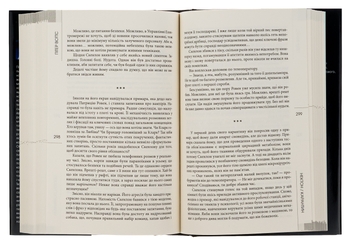
This is an automatically translated description
Peter Watts (born in 1958) is a world-renowned writer of the first echelon of hard science fiction. Drawing on the achievements of modern science in the fields of psychology, psychiatry, anthropology, mathematics, physics, chemistry and biology, Peter Watts constantly focuses his attention on the issues of the future development of humanity and the possibility of its transformation into something else, which are important for the present and critical for the future, outlines the issues of trans- and posthumanism, reflects on the possibilities of human self-awareness, and considers the possible challenges that humanity may face in the very near future.
The range of problems that Peter Watts raises in his work is extremely wide and diverse: from the classical ones - "what is a human being?", "what is a mind?" and "do we really need self-awareness to compete effectively with other organisms?" - to the very (in)possibility of contact with "others", as well as "who our creator (god) might be and whether we should meet him at all?"
Peter Watts's works can rightly be considered the literature of the future, not only in the sense of fiction, but also in the broadest sense of literature as such. And his masterful writing skills and extensive knowledge of the most diverse fields of modern science provide a powerful foundation for his texts, which are rightly admired around the world and which, with their appearance, have significantly changed the meaning and landscape of contemporary science fiction.
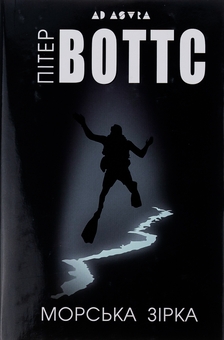
"Starfish" is the first novel of the "Rifters" trilogy, which began Peter Watts' journey to worldwide fame as one of the most powerful and brilliant representatives of the world's pantheon of hard science fiction masters. Unlike most of the subsequent series, in The Rifters the writer focuses on the near future of humanity on Earth, when, according to Watts the scientist, we will soon face inevitable environmental and energy problems, which will be superimposed on the problems of large-scale migration, even greater social and cultural stratification of society and an endless chain of economic crises. We are already witnessing all of this with our own eyes, and it is likely that at least the first half of the twenty-first century will be marked by these omens.
Deep underwater, a small group of modified submariners, antisocial outcasts from the surface world, maintain a power plant that feeds the entire west coast of the North American continent with energy from deep-sea volcanoes. However, disturbing things begin to happen in the monotonous and routine life of the station, and the management from the land are behaving increasingly strangely. A new danger is looming over all of humanity from a place no one has ever expected, and life forms as old as the world itself and newly created are preparing to compete for a dominant place in the Earth's biosphere.
It is in this disturbing, threatening, but also fascinating setting of our near future that The Rifters takes place - the setting of a world half a step away from irreversible catastrophe.