This is an automatically translated description
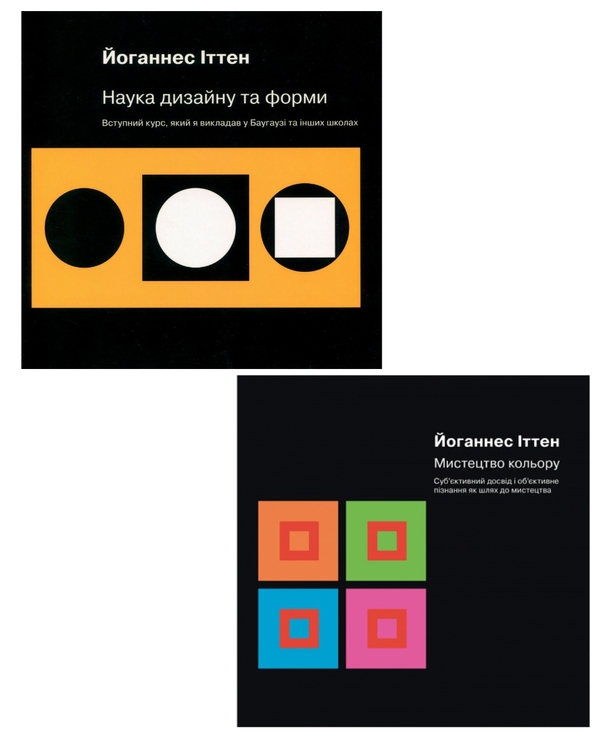
Book 1: The Art of Colour
"For the emerging artist and in the field of aesthetics in general, are there certain indisputable laws of colour and its rules, or is the aesthetic assessment of colour just an expression of subjective opinion? My students often asked me this question, and each time I answered like this: "If you can create a masterpiece using colour without knowing it, then you don't need to know anything about these laws. If you can't create a masterpiece without knowing anything about the laws of colour, then you need to work on your knowledge."
Training and theory are needed when working with colour on a superficial level. When it comes to thorough work, intuition comes into play, and everything happens as if by itself.
I thoroughly studied colour with the great masters and made sure that they all had knowledge about it.
The science of colour by Goethe, Runge, Bezold, Chevreul and Helzel was extremely valuable to me.
I hope that in this book I have managed to explain many of the problems of colour. We need to deal not only with the fundamental laws and rules of objective art, but also delve into the sphere of subjective limitations, that is, the subjective assessment of colour. If we want to get rid of the subjective attachment, we can only achieve this by studying and learning about objective laws," from the foreword by Johannes Itten.
Book 2. The Science of Design and Form. An introductory course I taught at the Bauhaus and other schools
"Each lesson is unique in those precious moments when you manage to touch the most secret strings of a particular student, to ignite their inner spiritual light.
The visual heritage of my life seems to me much poorer in comparison to what happened in my classes. The intonation, rhythm, sequence of words, time and place, the spiritual world of the students and all the other factors that formed the lively atmosphere of the classes cannot be repeated. But it is precisely this non-reproducible that contributes to creative work.
I found the format of my classes intuitively. The students' readiness to learn touched me a little bit.
Learning that a student strives for under the influence of his or her passion is somewhat opposite to what methodically thought-out lessons can do. Among my students, the best ones were those who chose their own, different path through their intuition.
Mere ostentatious monkeying around or repetition of my methods did not have any effect. At the same time, I am fully aware that my findings were not always truly innovative. Rather, they were a repetition of the experience of what had once provided artists with a basis for further work."
This lengthy quote from Johannes Itten's introduction to his own course-based book fully reveals his vision of learning, the role of the student and the teacher, and his reverence for the creative atmosphere of the school. This is the spirit of the Bauhaus, which gave rise to a powerful wave of artistic inquiry and creativity and remains one of the most striking and recognisable phenomena in the history of design. Now Johannes Itten's classic textbook in Ukrainian translation will inspire you.