This is an automatically translated description
From the publisher:
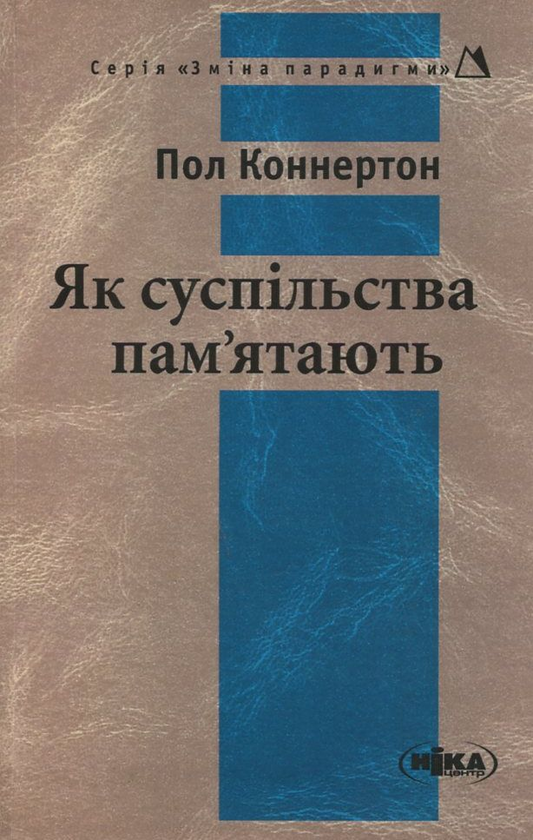
The book How Societies Remember by American sociologist Paul Connerton attracts with its lightness and at the same time sophistry of the research topic, which is devoted to the study and thorough analysis of the mechanisms of social memory. We no longer believe, the author notes, in the great "subjects" of history, such as the proletariat, the party, or the West, but the loss of such belief does not mean that these great metanarratives have disappeared. They continue to influence us subconsciously and are expressed in our way of behaving and understanding the present. In other words, they continue to live on in the form of "unconscious collective memories". Control over the memory of society is largely determined by the hierarchy of power. Our perception of the present depends on our knowledge of the past - we experience the present through the prism of events or objects from the past, linking the formation and course of the present with what happened before. Social memory plays an important role in this process: images from the past usually "justify"/legitimise the social order of the present. Connerton tries to understand how the memory of groups is maintained and transmitted to the next generations. He is convinced that there is a certain inertia of social structures that has not been adequately explained in the light of any contemporary theory of what social structures are.