This is an automatically translated description
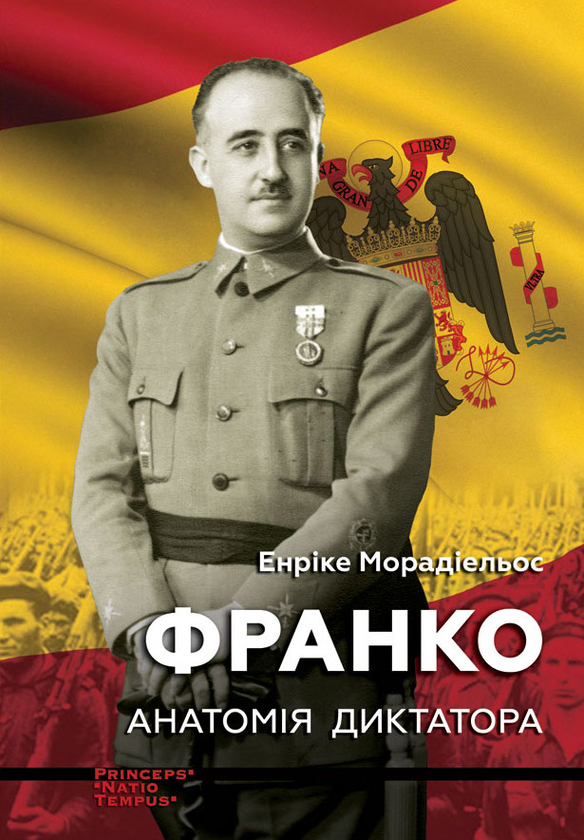
On 20 November 1975, General Francisco Franco died in Madrid shortly before his 83rd birthday. At the time of his death, he was the head of a dictatorial regime, retaining the title of Caudillo for almost 40 years. Spanish historian Enrique Moradiños portrays Franco in three dimensions: Franco as a man; Franco as a caudillo; and Franco as a ruler of Spain. The author proposes a reassessment of Franco's personality, his leadership style, and the nature of the regime he founded and led until his death.
As a dictator who established his power before the outbreak of World War II and successfully maintained it until the mid-1970s, Franco was one of the most important figures in twentieth-century European history. For Spain today, he is a ghost from its recent sad past: uncomfortable, but still very real and significant. We know less about Franco than we do about Mussolini, Hitler, or Stalin, and he was lucky enough to live a long life, to retain political influence and a positive public image for a long time. The study of the peculiarities and historical evolution of his regime sheds new light on fundamental questions of European history, including the social and cultural basis of totalitarianism and authoritarianism as threats to democracy, as well as the foundations of political legitimacy based on the charisma of a leader.