This is an automatically translated description
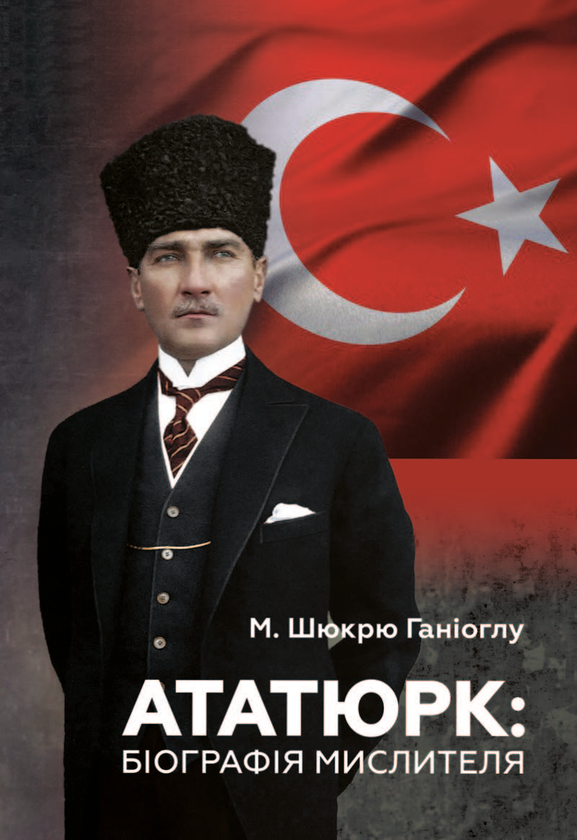
The book reveals the origins of the ideas of Mustafa Kemal Ataturk (1881-1938), which gave rise to the Republic of Turkey and the modern Turkish nation. Some of these ideas were shaped by the events of his childhood and education, followed by his military career and political activities. Others were influenced by the reforms, wars, uprisings and revolutions in the six-hundred-year-old Ottoman Empire, which was steadily fading. The author pays considerable attention to the books and magazines, both European and Turkish, from which Mustafa Kemal absorbed the popular, albeit highly dubious and utopian, theories of the late nineteenth and early twentieth centuries, including vulgar materialism, moral Darwinism, positivism, nationalism, racial anthropology, and authoritarianism. The study also presents a gallery of individuals with whom Ataturk shared ideas or, conversely, argued, from whom he learned, and whom he used. As a result, Atatürk is not a creator of original ideas, but a politician who managed to implement the utopian projects of marginalised Western European intellectuals of his time.
Thoughtful Ukrainian readers with European ambitions will find this book a unique opportunity to reflect on why Turkey, almost a century after the course Ataturk took, is still on the threshold of Western civilisation.
Sükru Ganioğlu is a professor of Middle Eastern Studies at Princeton University (USA). He was born in Turkey in 1955. He graduated from Istanbul University with a degree in political science and economics and received a doctorate in political science. His dissertation was on the political activities and theoretical work of Dr Abdullah Cevdet, one of the founders of the Turkish Unity and Progress Committee (CHP). M. Şükrü Ganioğlu has devoted much time and effort to researching the history of the CHP and the Young Turkish Revolution, using the organisation's documents and archival sources from a number of countries, including Albania, where he was lucky enough to have access as one of the few foreign researchers.
He is currently one of the world's leading experts on the history of the late Ottoman Empire and the intellectual and diplomatic history of nineteenth-century Turkey. He was awarded the Turkish President's Grand Prize for Culture and Arts and the Turkish Science and Technology Council's Award. He is a columnist for the Turkish newspaper Sabag.